Most claims about "AI-powered cyberattacks" come without numbers. On 3 June 2026 Anthropic published a dataset with them: a year of accounts banned for malicious cyber activity, mapped to the industry-standard MITRE ATT&CK framework and shared with Verizon for its 2026 Data Breach Investigations Report (DBIR).
The findings are narrow, because they describe one vendor's platform. They are also unusually concrete.
Key takeaways:
- Anthropic analysed 832 accounts banned for malicious cyber activity between March 2025 and March 2026.
- 67.3% (560 of 832) used AI to write malware.
- Actors classified as medium risk or higher rose from 33% in the first six months to 56% in the second six months.
- Behaviour was mapped to MITRE ATT&CK tactics and techniques, making it comparable with other threat intelligence.
- The data fed into Verizon's 2026 DBIR, one of the most cited annual reports in security.
What MITRE ATT&CK is
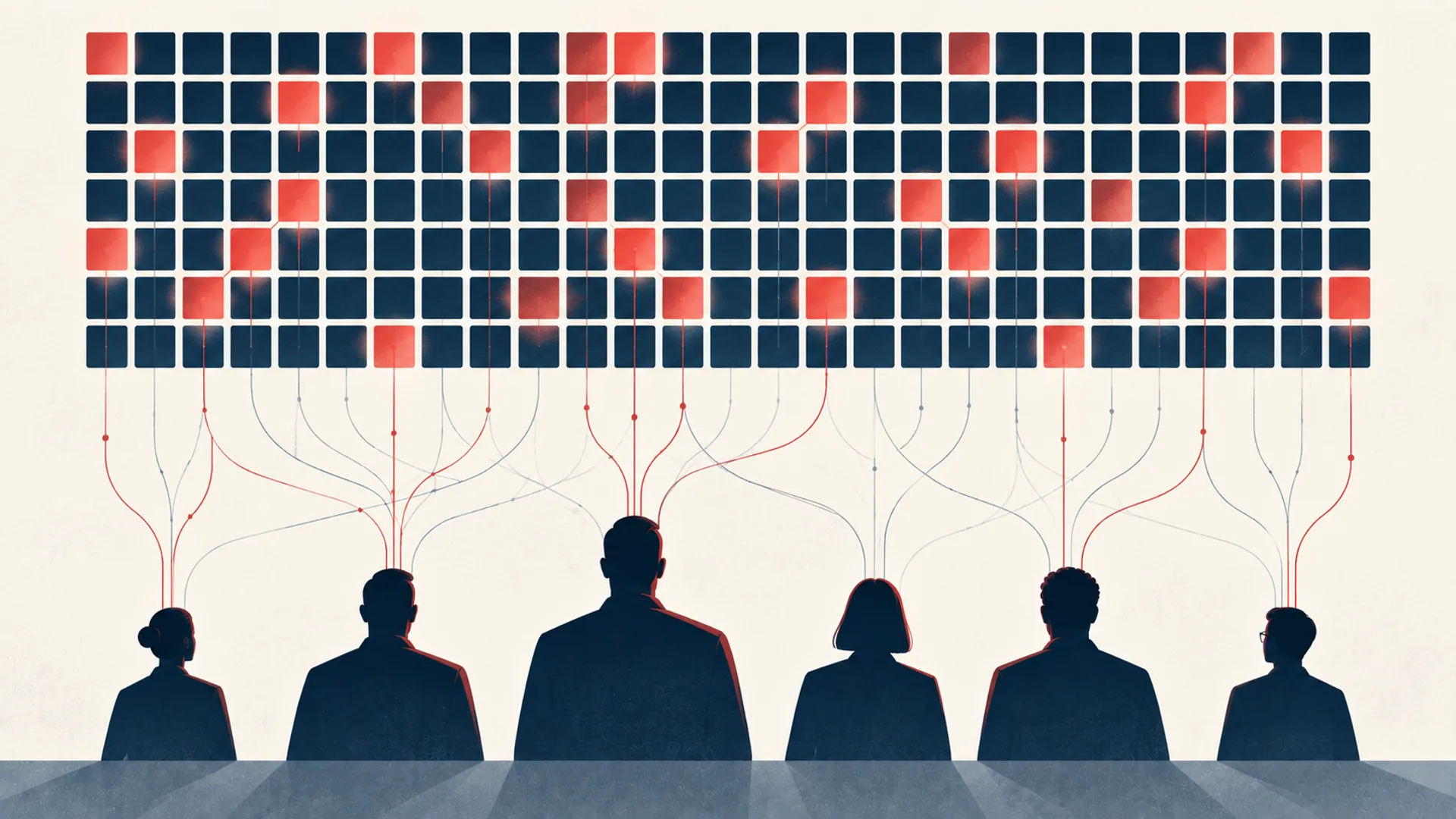
If you are new to security, ATT&CK (Adversarial Tactics, Techniques and Common Knowledge) is a public knowledge base maintained by the MITRE Corporation. It organises attacker behaviour into tactics (the goal, such as initial access, persistence or exfiltration) and techniques (how the goal is achieved, such as phishing or credential dumping).
Its value is shared language. When Anthropic says an account's behaviour maps to a particular technique, a defender at a bank or a hospital can compare it directly with what they see in their own logs.
What the data shows
| Metric | First 6 months | Second 6 months |
|---|---|---|
| Actors rated medium risk or higher | 33% | 56% |
| Accounts using AI to write malware (whole period) | 67.3% of 832 |
Two patterns stand out.
Malware authorship is the dominant use. Two-thirds of the banned accounts were using the model to write malicious code. That is consistent with what defenders have long expected: code generation is the most obvious offensive application of a language model.
Capability is climbing. The proportion of accounts rated medium risk or above rose by 23 percentage points between the two halves of the year. Anthropic's reading is that AI-assisted actors are becoming more capable over time, either because more skilled attackers are adopting the tools or because the tools are raising the floor for less skilled ones.
Why release this at all
Vendors have an incentive not to publish data showing their products being abused. Two things make this release useful anyway. First, it is mapped to an open standard, so it can be cross-checked against other telemetry. Second, it was released jointly with the DBIR, which aggregates breach data from dozens of contributors and applies its own methodology.
Concept to take away: think in tactics, not tools. Defenders do not organise their work around "AI attacks" any more than they organise it around "attacks that used a keyboard." They organise around what the attacker is trying to do at each stage. Learning the ATT&CK matrix is one of the fastest ways to move from AI enthusiast to someone a security team can talk to.
The caveats
- This is one platform's banned-account data, not a survey of the internet. Attackers using other tools, or open-weight models on their own hardware, are invisible here.
- "Medium risk or higher" is Anthropic's own classification; the report should be read for how it is defined.
- A rising share of higher-risk actors could reflect better detection as much as more capable attackers.