On 23 June 2026 Stack Overflow opened its sixteenth annual Developer Survey, this year built around a single question: where do AI agents actually fit in the software development lifecycle, and are teams seeing return on investment or "still running on vibes"?
Results typically land two to three months after the survey closes, so they are not out yet. That has not stopped a wave of blog posts confidently citing "the 2026 survey". They are quoting the 2025 results. The numbers are real and important. The year is wrong.
Key takeaways:
- The 2026 survey opened 23 June 2026; results are pending. Stack Overflow's separate agents survey earlier in 2026 found agent usage had doubled since 2024 while concerns grew.
- 2025 results (49,000+ respondents, 177 countries): 84% of developers use or plan to use AI tools; 51% of professionals use them daily.
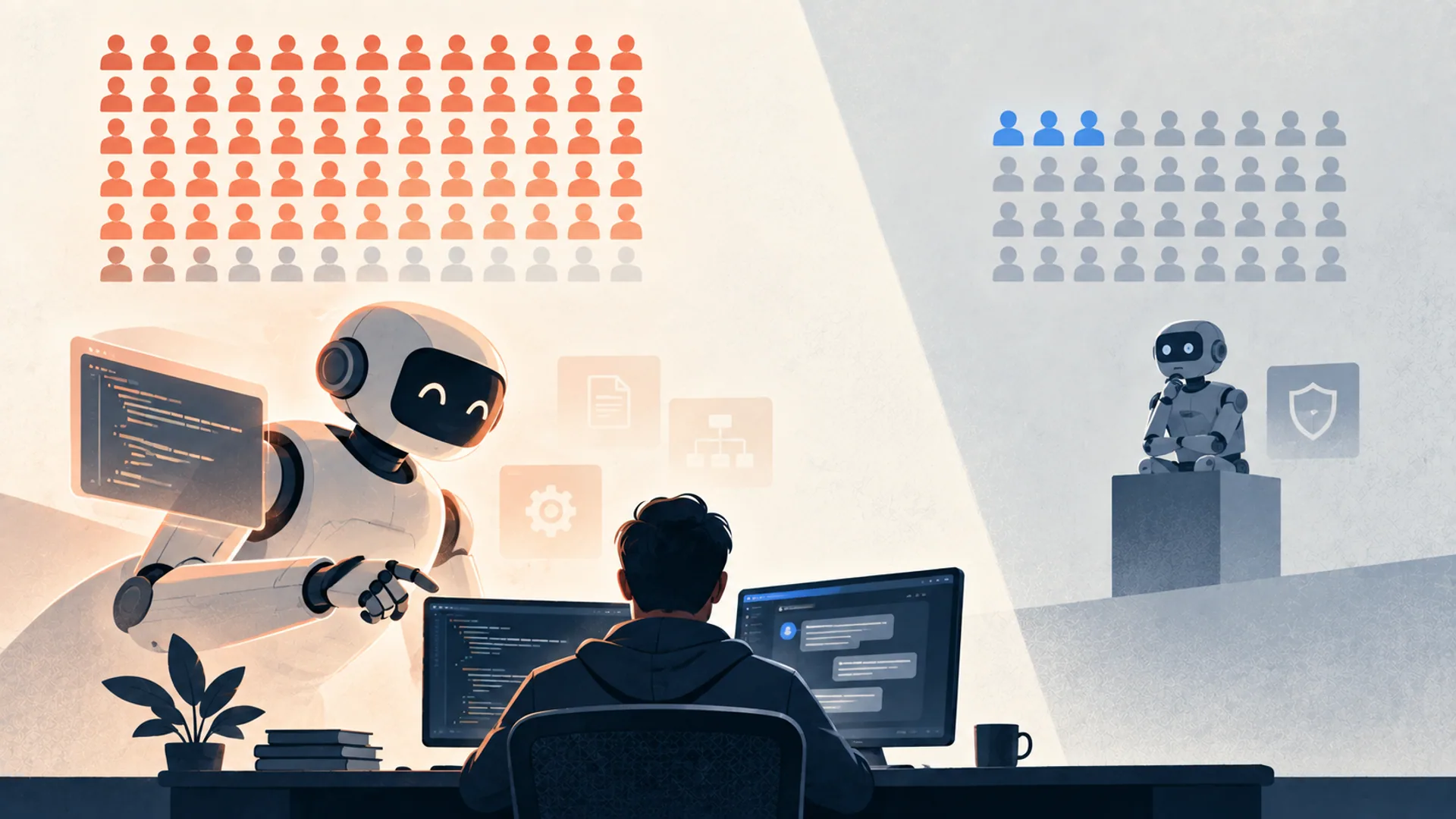
- Trust in the accuracy of AI output fell to 29%, from 40% in 2024. 46% actively distrust it. Only 3% "highly trust" it (2.6% among experienced developers).
- The top frustration (66%) is AI code that is "almost right, but not quite".
- 75% say the main reason they would still ask a human is "when I don't trust AI's answers".
The paradox
With most new technologies, trust grows with use. Stack Overflow's data shows the opposite for AI coding tools.
| Measure | 2024 | 2025 |
|---|---|---|
| Use or plan to use AI tools | ~76% | 84% |
| Trust accuracy of AI output | 40% | 29% |
| Actively distrust | — | 46% |
| "Highly trust" | — | 3% |
The 2025 survey also captured how tools were shifting. VS Code held first place among editors for the ninth year at 75.9%. Cursor debuted at 17.9%, landing sixth. Claude Code recorded 9.7% in what Stack Overflow described as the fastest first-year debut in the survey's history. Yet 72% of respondents said "vibe coding" was not part of their professional work.
Why trust is falling
The survey's own explanation is in the frustration data. Two-thirds of developers cite code that is "almost right". Almost-right code is more expensive than obviously wrong code: it passes a glance, fails later, and costs debugging time that the tool was supposed to save. The more developers use these tools, the more of that they experience.
Experienced developers are the most cautious, with the lowest "highly trust" rate and the highest "highly distrust" rate. These are the people who carry accountability for what ships.
The mis-dating problem
Several widely shared posts have presented the 2025 figures as 2026 findings, some insisting on the wrong year even after readers flagged it. Why it matters: anyone building a trend argument on those posts has their timeline off by twelve months, and anyone comparing them against the real 2026 results when they arrive will draw the wrong conclusions.
Concept to take away: check the primary source and the year. The 2025 results live at survey.stackoverflow.co/2025. If a post cites "2026" numbers before Stack Overflow has published them, it is wrong. This is a small habit with a large payoff, and it applies to every statistic you will ever put in a slide.
What to look for when the 2026 results land
- Whether agent usage has genuinely moved from experimentation to measured ROI.
- Whether the trust line keeps falling as usage keeps rising.
- How the editor and tool rankings shift after a year of agentic tools.
Note: Stack Overflow reports 46% distrust versus 33% trust on one question, and 29% trust on another; the difference is a question-wording and segmentation artefact, not an error. Name the question when you quote either figure.