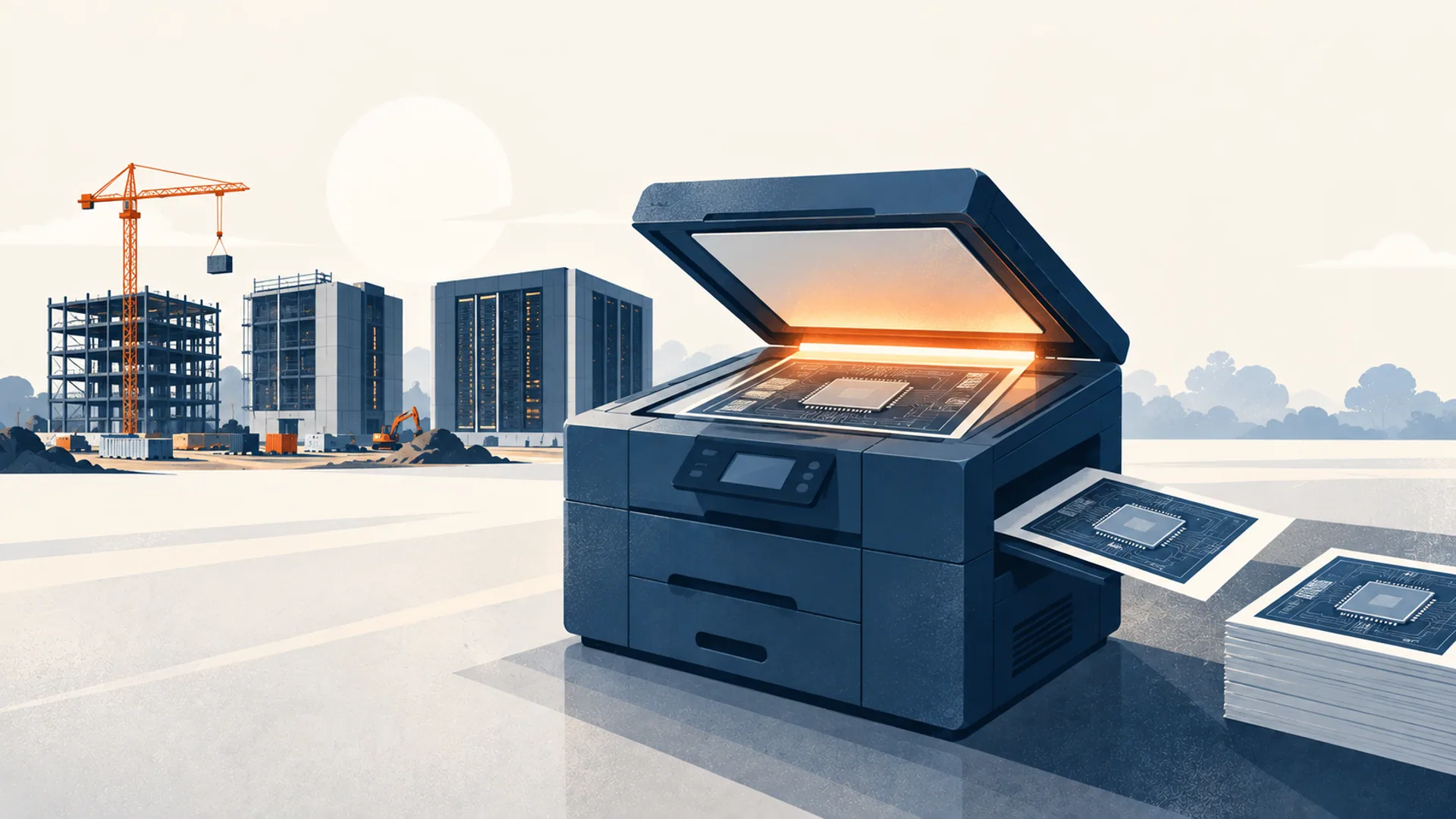
Groq's 2026 is one of the strangest corporate stories in AI hardware. In December 2025 NVIDIA paid approximately $20 billion for a non-exclusive licence to Groq's Language Processing Unit (LPU) architecture and hired several senior Groq staff, including its founding chief executive Jonathan Ross. Existing investors were paid out around $7.6 billion.
Most companies do not survive that. On 22 June 2026 Groq announced it had raised $650 million in new growth capital to expand as an AI inference cloud, and in August added a further $350 million Series A, taking recent funding to $1 billion.
Key takeaways:
- December 2025: NVIDIA licenses Groq's LPU technology for ~$20bn (non-exclusive) and hires key Groq executives.
- March 2026: NVIDIA debuts the Groq 3 LPU inside its rack-scale LPX inference system at GTC.
- 22 June 2026: Groq raises $650m, led by Disruptive and Infinitum, to scale its inference cloud.
- August 2026: a further $350m Series A brings recent funding to $1bn.
- Groq operates 13 data centres across North America, Europe, the Middle East and Asia-Pacific, serves more than five million developers and processes trillions of tokens a week.
- Target: quadruple capacity to 200 MW by the end of 2027. Last disclosed valuation: $6.9bn after a $750m round in September 2025.
What an LPU is
Groq, founded in 2016 by former Google engineers who had worked on the TPU, designed a chip for one job: running trained models fast. Unlike a GPU, which evolved from graphics and is good at many things, the LPU is built around deterministic, low-latency execution of language-model inference. Its pitch has always been speed per token and cost per token, the two numbers that decide inference economics.
From chip company to cloud company
The NVIDIA deal removed Groq's obvious path: selling chips against NVIDIA. It did not remove the hardware, the data centres or the customer base. Groq's response is a pivot from chip vendor to what the industry now calls a neocloud: a provider that rents inference capacity to developers and enterprises, competing with hyperscalers on speed and price rather than on breadth.
The new capital funds two things: fitting out its existing footprint with its latest inference hardware (including NVIDIA's new LPX system, built on Groq's own licensed design), and scaling towards 200 MW of capacity by the end of 2027. Groq also brought in new leadership, including Alan Rice, who previously worked on xAI's Colossus data centre and Meta's data centres, as chief operating officer.
| Before the NVIDIA deal | After | |
|---|---|---|
| Business model | Sell LPU chips and systems | Rent inference capacity (GroqCloud) |
| Founding CEO | Jonathan Ross | Joined NVIDIA; Groq led by executive chairman Alex Davis |
| Relationship to NVIDIA | Competitor | Licensor and customer |
| Capacity | 13 data centres | 13 data centres, targeting 200 MW by end-2027 |
Why it matters for the hardware picture
Two lessons travel beyond Groq.
Inference is where the money is going. Groq's own statement calls inference the layer that will become the largest and most critical in AI infrastructure. NVIDIA integrating an LPU into Vera Rubin, Intel building Crescent Island around inference economics and Groq raising $1bn for an inference cloud all point the same way.
The "not-an-acquisition" is now a pattern. Licensing a start-up's technology and hiring its team, without buying the company, sidesteps merger review. It leaves the original company alive but transformed. Groq is the largest example so far.
Concept to take away: the neocloud. Traditional clouds (AWS, Azure, Google Cloud) sell everything. Neoclouds sell one thing, GPU or LPU capacity for AI, and compete on price, availability and speed. For a developer, the practical question is no longer "which chip" but "which provider serves my model fastest per dollar."